If you are looking for a rotary vibrating screen manufacturer, do not rush to compare prices. More importantly, the manufacturer should be able to select the right machine based on your material, capacity, and screening requirements.
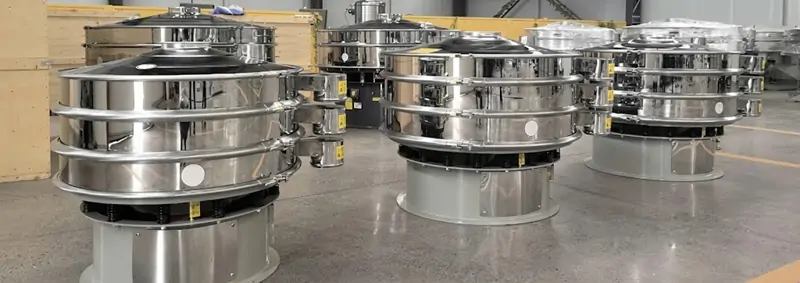
Even for the same rotary vibrating screen, the machine configuration can vary with the material, screen aperture, and required capacity. If a manufacturer only gives you a model and a quotation but cannot explain why the machine was selected, you may later face problems such as insufficient capacity, screen clogging, or difficulty connecting the machine to your production line. When choosing a manufacturer, do not look only at the quotation. The following questions are worth asking before you make a decision.
What Should You Look for First When Choosing a Rotary Vibrating Screen Manufacturer?
1.Does the Manufacturer Actually Manufacture the Machine?
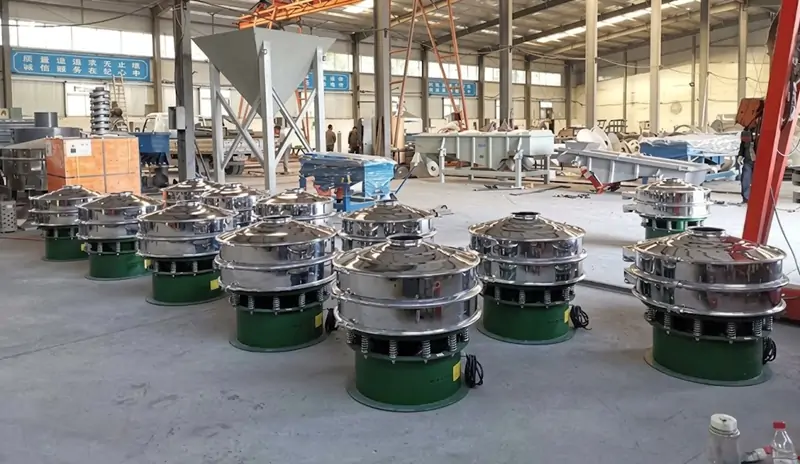
You can ask directly: “Do you manufacture this rotary vibrating screen yourselves?” If the answer is yes, the manufacturer should be able to clearly explain the machine structure, screen installation, motor configuration, and materials used for product-contact parts. If you later need to change the machine dimensions, inlet, outlet, or number of screen decks, you can also communicate directly with the production side. If the manufacturer does not make the machine themselves, ask who actually manufactures it, which parts can be adjusted, and who will handle technical issues later.
2.Does the Manufacturer Know How to Select the Right Machine?
Do not just ask, “Do you have a rotary vibrating screen?” Ask another question: “Based on my requirements, what configuration do you recommend?” This can show whether the manufacturer really understands equipment selection. A manufacturer that knows the application should be able to explain why a particular machine is recommended, rather than simply giving you a model number and a price.
Different projects require different rotary vibrating screen configurations. Screening coarse particles, screening fine powders, and separating several particle sizes may all require different machine setups. If a manufacturer only tells you the model and price but cannot explain why that configuration was selected, take a closer look before buying.
3.Can the Machine Be Adjusted for Different Site Conditions?
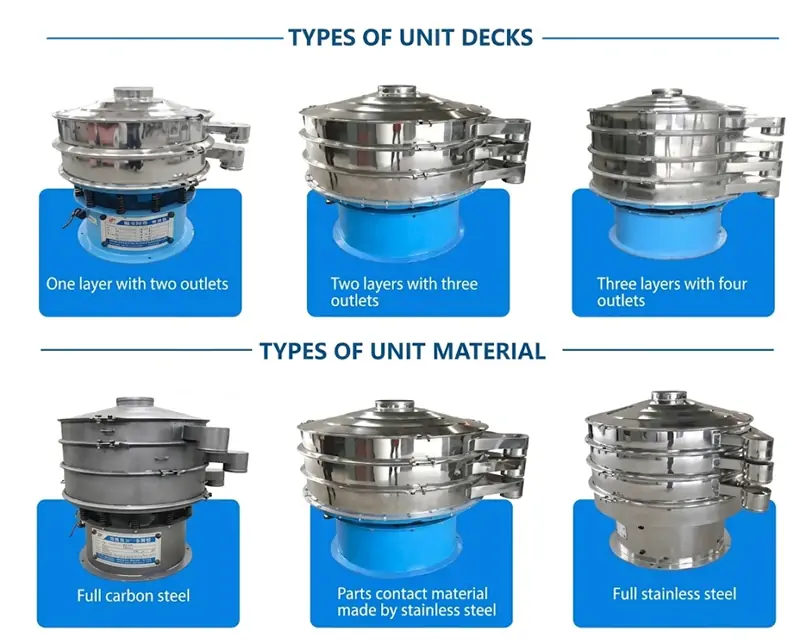
Some projects can use a standard machine, while others require adjustments based on site conditions. For example, if the available height is limited, the machine height may need to be adjusted. If the upstream equipment is fixed in position, the inlet may need to be modified. If the downstream equipment is in a different position, the outlet may need to be adjusted. If the material needs to be separated into several particle-size fractions, the number of screen decks needs to be considered. If the material requires a specific construction material, the product-contact parts also need to be confirmed.
It is best to tell the manufacturer about these requirements before receiving the quotation. However, there is no need to customize the machine just for the sake of customization. If a standard machine already meets your capacity, screening requirements, and installation conditions, there is no need to add unnecessary configurations. A more complicated machine is not always a better machine. The right configuration is the one that fits your application.
Can the Manufacturer Select the Right Machine for Your Material?
There is no single Rotationssieb that suits every material. When the material, screen aperture, or required capacity changes, the machine configuration may also need to change. A manufacturer should therefore not select a model based on just one parameter.
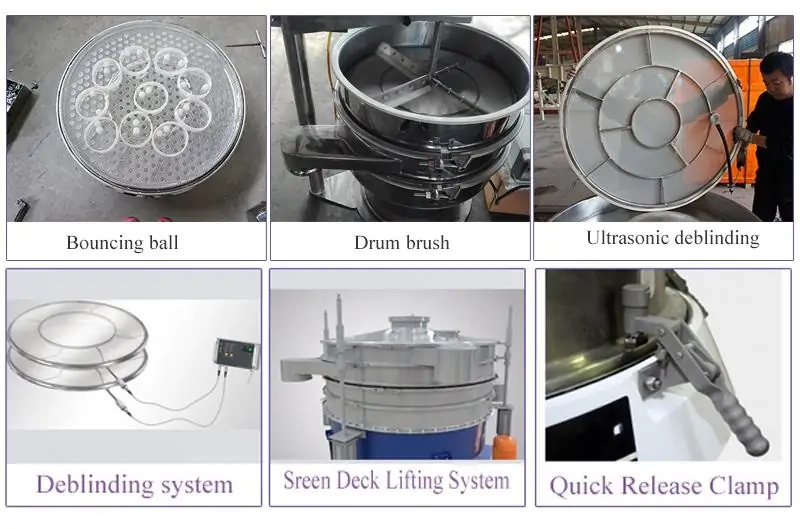
For example, screening flour, starch, metal powder, and granular materials involves different conditions. Some materials flow easily, while others tend to agglomerate, stick to the screen, or clog the mesh. The manufacturer needs to understand these conditions before deciding on the screen mesh, machine size, number of screen decks, and screen cleaning method.
Mesh count alone is also not enough to select the machine. If you say, “I need 200 Mesh,” the manufacturer still needs to know the feed particle size, what you want to remove or separate, and how much material you need to process per hour. If the goal is only to remove coarse particles, the configuration will be different from a process that separates the material into several particle-size fractions.
Capacity also needs to be clearly defined. If a manufacturer says the machine can process 2 tons per hour, ask further: What material? What mesh size? How many screen decks? The capacity of the same machine can vary significantly under different conditions. If the manufacturer asks these questions and then explains why a certain machine diameter and number of screen decks are recommended, as well as whether a screen cleaning device is needed, that is meaningful equipment selection.
Do not start by asking which machine is the cheapest. First see whether the manufacturer can clearly understand your application.
What Information Should You Provide When Requesting a Quotation?
Many buyers simply say, “I need a rotary vibrating screen. Please send me a quotation.”
That is not enough for the manufacturer. Preparing the following information before requesting a quotation can make communication much faster.
| Anzugebende Informationen | What It Mainly Affects |
| Material name and condition | Material properties and screening difficulty |
| Aufgabepartikelgröße | Screening conditions |
| Target particle size or screen aperture | Screen selection |
| Required capacity per hour | Machine size |
| Number of particle-size fractions required | Number of screen decks |
| Whether the material agglomerates, clogs, or sticks to the screen | Siebreinigungsmethode |
| Food, pharmaceutical, or corrosion-resistant requirements | Product-contact material |
| Available height, inlet and outlet positions | Machine dimensions and connections |
There is one more important point: tell the manufacturer what you ultimately want to obtain from the screening process. For example, do you want to remove coarse particles, obtain qualified powder, or separate the material into several particle-size fractions? If you only say, “I need 200 mesh,” the manufacturer still does not know your exact requirement.
If you have a material sample, you can also ask whether the manufacturer can carry out a screening test. When the screening requirement is strict, an actual screening test can provide more useful information than simply looking at specifications.
The more complete the information you provide, the easier it is for the manufacturer to select the right machine, and the more useful the quotation will be for comparison.
How Should You Compare Rotary Vibrating Screen Manufacturers and Quotations?
After receiving several quotations, do not immediately choose the lowest price. When comparing rotary vibrating screen suppliers, first check whether the machine configurations are the same.
Put the machine dimensions, number of screen decks, screen mesh, material, screen cleaning method, and inlet and outlet structure from each quotation side by side. For example, one manufacturer may use stainless steel for product-contact parts while another uses standard carbon steel. One may include two screen decks while another includes only one. One may include a screen cleaning device while another charges for it separately. These quotations cannot be compared only by their final prices.
Do not compare capacity based on the numbers alone either. Manufacturer A may state 1,000 kg/h, while Manufacturer B states 2,000 kg/h. That looks like a twofold difference, but if the materials, screen apertures, number of screen decks, and screening requirements are different, the two figures cannot be directly compared.
Another point that is easy to overlook is what exactly is included in the quotation. Ask whether the screen mesh, motor, screen cleaning device, inlet, and outlet are already included, which items are optional, and whether there will be additional costs later.
When comparing manufacturers, do not compare only the price. First align the machine configurations and operating conditions, then compare the quotations. That is the fairer way to compare.
When Do You Need a Custom Rotary Vibrating Screen?
If a standard machine already meets your capacity, screening requirements, and installation conditions, there is no need for customization.
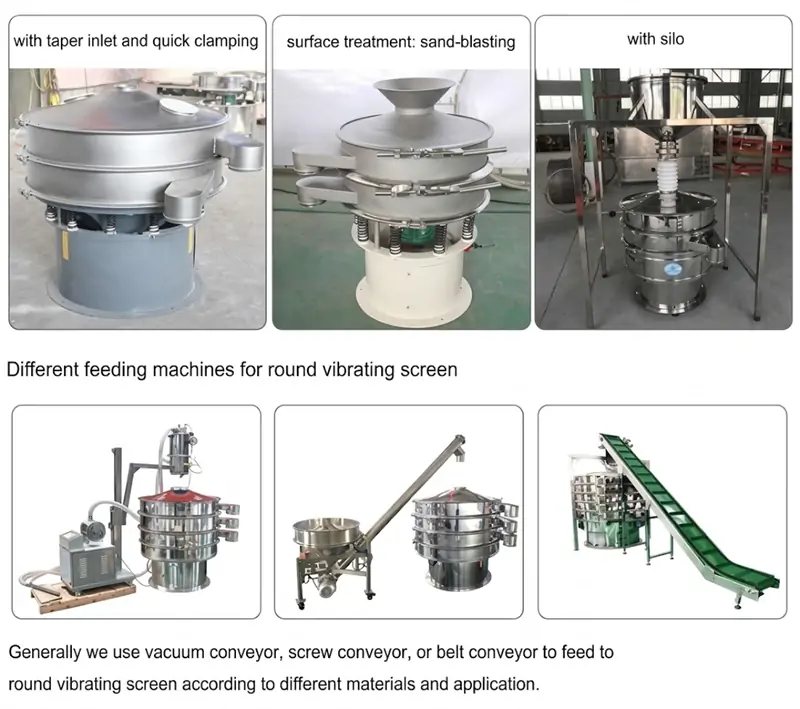
Customization is generally needed when there are specific limitations at the site or in the screening process. For example, the available machine height may be limited, the inlet or outlet position may be fixed, multiple screen decks may be required, or the material may require specific product-contact materials or a particular screen cleaning method. These requirements should be communicated before the quotation because they directly affect the machine dimensions and configuration.
Customize the parts that need to be changed, and do not add changes that are not necessary. This makes installation easier and helps keep the purchasing cost under control.
Commonly Overlooked Issues When Purchasing a Rotary Vibrating Screen
Some buyers focus only on the equipment price and the maximum capacity stated by the manufacturer, while overlooking whether the machine is suitable for the installation site. If the inlet height, outlet direction, or number of screen decks has not been confirmed before ordering, you may only discover the need for modifications after the machine arrives, which can be troublesome.
When buying a rotary vibrating screen, do not focus on which manufacturer gives the biggest specifications. Look for the one that can clearly understand your application and explain the machine configuration.
If you are still unsure about the machine dimensions, screen mesh, number of screen decks, or configuration, you can provide Jiarui with your material, required capacity, and site conditions. Jiarui engineers can help determine the appropriate machine and configuration based on your actual operating conditions.
Häufig gestellte Fragen
Can My Material Be Screened with a Rotary Vibrating Screen?
It depends on the material condition and screening requirements. Powders and granules can both be screened with a rotary vibrating screen, but materials that tend to agglomerate, stick to the screen, or carry static electricity require further consideration of the screen mesh and screen cleaning method. Before purchasing, it is best to provide the manufacturer with the material name, particle size, and screening requirements.
How Much Material Can a Rotary Vibrating Screen Process per Hour?
Capacity cannot be determined by the machine model alone. It also depends on the material, screen aperture, number of screen decks, and screening requirements. When a manufacturer gives you a capacity figure, confirm which material and screen conditions that figure is based on.
I Only Know the Screen Mesh Size. What Should I Do If I Don’t Know What Machine Size to Choose?
Provide the manufacturer with the material, feed particle size, target particle size, and required capacity per hour. The manufacturer can use this information to determine the machine diameter, number of screen decks, and screen mesh instead of selecting the machine based only on mesh count.
Can I Still Use a Rotary Vibrating Screen If My Material Easily Clogs the Screen?
First, identify the cause of the clogging. Fine powders, materials that tend to agglomerate, sticky materials, and materials with static electricity can all affect screening. Depending on the specific condition, options such as bouncing balls, a screen cleaning device, or ultrasonic screen cleaning can be considered. There is no need to add every option from the beginning.
How Many Screen Decks Does a Rotary Vibrating Screen Need?
It depends on how many particle-size fractions you need to separate. If you only need to remove coarse particles, many screen decks are usually unnecessary. If you need to continuously separate the material into several particle-size fractions, the appropriate number of screen decks should be selected based on the target particle sizes. More screen decks are not always better. Capacity and material movement across the screen surface also need to be considered.
Can Jiarui Customize a Rotary Vibrating Screen to My Requirements?
Yes. Jiarui can adjust the machine dimensions, number of screen decks, screen mesh, product-contact materials, and inlet and outlet structure according to the material, capacity, screening requirements, and site conditions. You can provide the material, required capacity, and installation conditions, and the engineer will first determine whether a standard machine is suitable and then identify which parts need to be customized.